

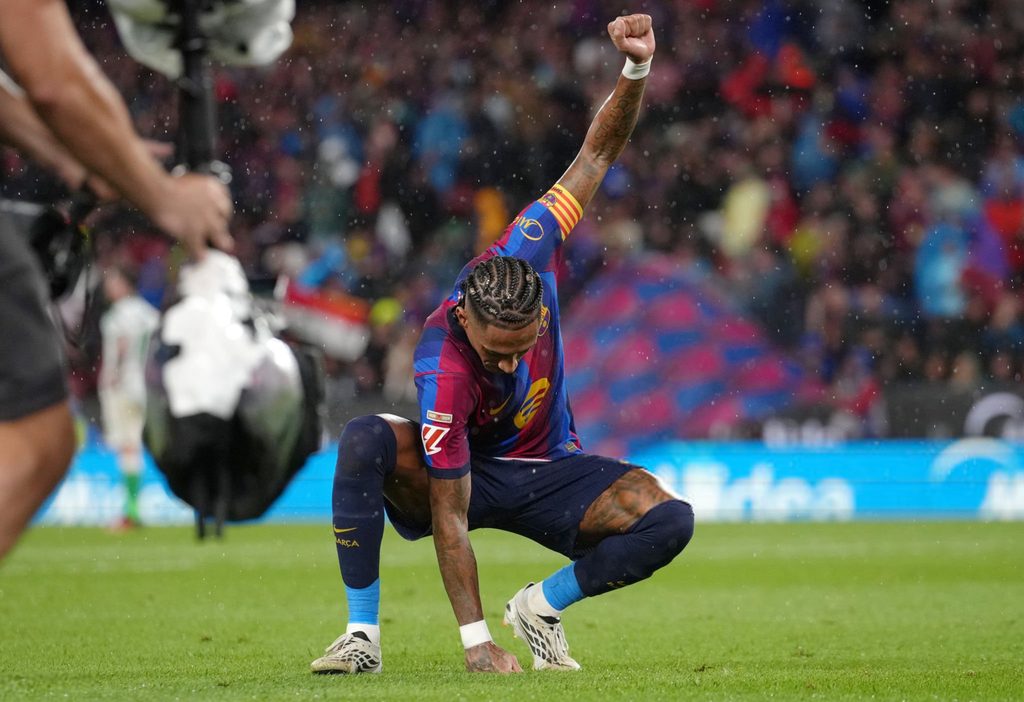
Barcelona has delivered a phenomenon-level attacking display in the new La Liga season. In the opening rounds, the Catalan giants have repeatedly posted lopsided scorelines, netting 17 goals in the first four league matches — the most prolific attacking start in La Liga in 68 years, averaging over four goals per game and topping all Big Five League sides.
The refreshed front line of Raphinha, Lamine Yamal and Fermín López has fired on all cylinders, with a multi-dimensional scoring model leaving opposition defenses helpless. This relentless goal rush has sparked a heated debate across European football: can this free-scoring Barcelona side challenge the long-standing single-season team scoring record in the Big Five Leagues?
By examining the team’s tactics, squad depth, fixture congestion and historical benchmarks, we can objectively assess the feasibility — and the potential obstacles — of a record-breaking campaign.
1. The Attacking Core: Flick’s System Unlocks a Squad-Wide Scoring Threat
The biggest change in Barcelona’s attack this season is that they have moved away from relying on a single striker and built a system in which every player can contribute to goals. Hansi Flick’s high-pressing setup allows the team to win the ball quickly in the final third.
They can either break down deep defenses through intricate possession play or hit teams on the counter with rapid transitions. Long-range strikes, set pieces, wide deliveries and penalty-area penetration all offer reliable scoring routes.
The numbers underline Barcelona’s attacking dominance. Beyond the raw goal tally, their expected goals (xG) also rank first among the Big Five Leagues, meaning the quality of chances they create is exceptionally high — not merely a product of fortunate finishing.
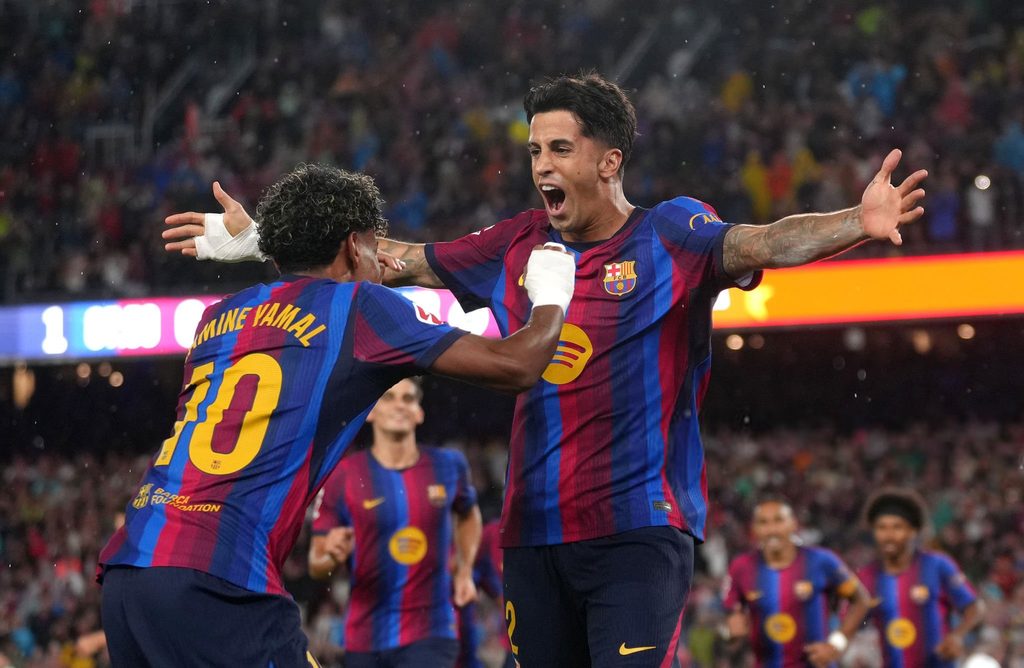
Raphinha has taken on the role of attacking focal point, Yamal continues to fulfill his immense potential, and Fermín consistently chips in with crucial goals. With multiple forwards and midfielders capable of finding the net at any moment, opponents cannot simply mark one player out of the game. This distributed firepower is the foundation that allows Barcelona to maintain a consistent scoring output.
2. The Record Benchmark: Historical Targets Make the Challenge Far Harder Than It Looks
In the history of the Big Five Leagues, the all-time single-season team scoring record belongs to Torino, who netted 125 goals in the 1947–48 Serie A season. Real Madrid’s 121 goals in the 2011–12 La Liga campaign ranks second and remains the most familiar benchmark for modern fans.
With 38 matchdays in a La Liga season, matching Real Madrid’s 121-goal mark requires an average of 3.18 goals per game; to surpass Torino’s 125-goal ceiling, the average climbs to 3.29 goals per match.
Barcelona’s opening average of 4.25 goals per game comfortably exceeds that threshold. However, a critical caveat applies: a scorching early-season scoring rate is almost never sustainable across all 38 rounds.
The second half of the campaign brings stronger opponents, injuries, fatigue and increasingly sophisticated defensive gameplans tailored to neutralize Barcelona’s threats. Historically, countless teams that have exploded out of the blocks have seen their scoring efficiency dip noticeably mid-season. A blistering start proves attacking potential — it does not guarantee a historic final tally.
3. The Constraints: Injuries, Fixture Congestion and Opponent Adjustments
To keep the goals flowing, Barcelona must navigate three real-world hurdles.
Injury risk. Barcelona’s attack depends heavily on the rotation and form of multiple front-line players. If key attackers such as Yamal or Raphinha pick up injuries, the integrity of the attacking system is compromised and the advantage of multi-point scoring is sharply reduced. Over a long season, no squad can realistically keep its entire attacking unit fully fit.
Physical toll of competing on multiple fronts. Barcelona must juggle La Liga, the Champions League and the Copa del Rey simultaneously. As the fixture schedule intensifies through autumn and winter, midweek matches will continuously drain player energy. When bodies are fatigued, attacking movement, pressing intensity and finishing efficiency all decline — making it extremely difficult to sustain a four-goal-per-game standard.
Opponents’ defensive adjustments. As Barcelona’s attacking patterns become thoroughly studied, subsequent opponents are likely to adopt deep, compact defensive blocks, ceding possession and flooding the penalty area to compress Barcelona’s attacking space. Against a parked bus, even the most potent attacking sides can struggle to break through, and the difficulty of scoring rises significantly.
4. A Theoretically Possible Chase, But the Odds Are Long
Taken together, Barcelona’s current attacking talent, tactical system and player form keep a tilt at the Big Five Leagues’ single-season scoring record within the realm of theoretical possibility. Their chance-creation and finishing efficiency already place them at the very top of European football this season.
If the core squad stays healthy, the team continues to rack up big scores against weaker sides and finds the net consistently against stronger opposition, Barcelona could genuinely challenge Real Madrid’s modern benchmark of 121 goals.
Yet breaking Torino’s all-time record of 125 goals remains extraordinarily difficult. Too many uncertainties exist across a marathon season, and a regression from an explosive early scoring rate is the norm in football. The more likely outcome is that Barcelona finishes the season as the top-scoring team in La Liga — and possibly across all of Europe — producing an attacking campaign that enters club folklore, but falls just short of the all-time historical mark.
Even if the record ultimately eludes them, this Barcelona side’s attacking spectacle is already remarkable enough.
The fresh system Flick has built has restored the club’s signature fluid, breathtaking attacking style. Whether or not history is rewritten, this relentless wave of goals has already made Barcelona the most entertaining team to watch in European football this season.