

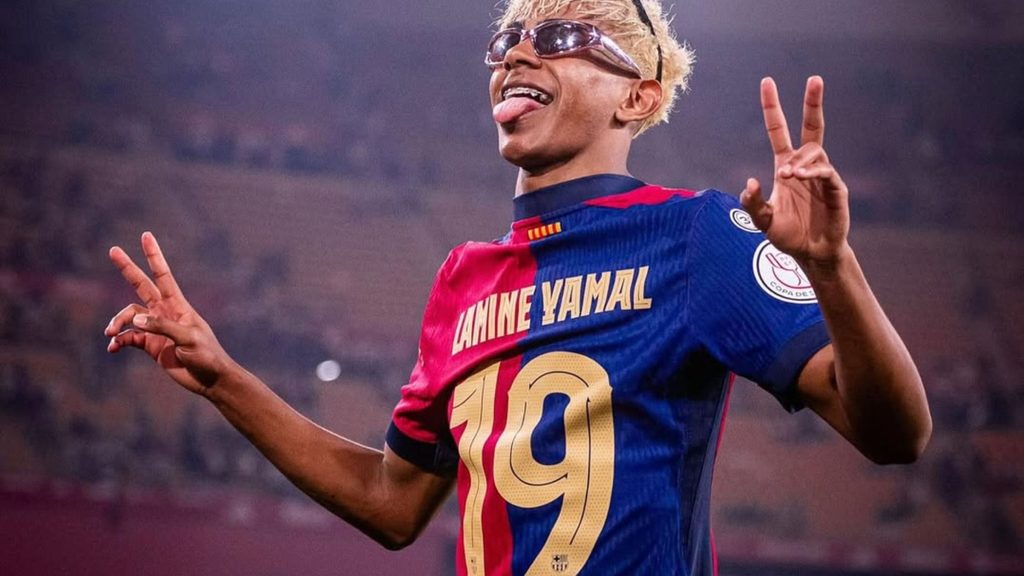
The new La Liga season has witnessed a phenomenal attacking run from Barcelona youngster Lamine Yamal. The teenage star has netted seven goals across the opening four league fixtures, registering consecutive braces and stunning European football with his ruthless goalscoring form. As a left-footed talent forged in La Masia, operating from the right flank and wearing Barcelona’s iconic No.10 jersey, fans and media naturally draw comparisons between him and Lionel Messi. While his short-term goalscoring explosion is remarkable, replicating Messi’s transformation from a pure wide threat into a fluid forward playmaker is far more than a matter of impressive goal statistics.
Parallel Beginnings: Right-Footed Cut-In and Shared La Masia DNA
Yamal and Messi share core similarities in their technical profiles. Both are left-footed players who prefer starting on the right wing before cutting inside towards the box to shoot — a classic attacking tactic perfected by Barcelona. Teenage Messi also began his career as a right winger, relying on delicate dribbling and sharp direction changes to break down defences, gradually refining his cut-in finishing ability.
Under Hansi Flick’s tactical overhaul this term, Yamal is no longer pinned to the touchline. The manager encourages him to drift inwards and make frequent runs into the penalty area. This tactical tweak unlocked his clinical finishing, yielding 7 goals in 4 matches. Instead of only delivering crosses or driving past defenders down the wing, he now regularly surges forward to arrive in the box for poacher’s chances. This marks the first phase of Messi’s own evolution: shifting from a wide tactical option into a consistent penalty-area finisher.
However, physical traits create inherent stylistic differences. Standing at 170cm, Messi boasted an ultra-low centre of gravity, enabling elite close-quarters dribbling and exceptional ball retention under tight marking. Yamal is taller than 180cm, with longer strides and explosive acceleration, yet a higher centre of gravity. His stability during continuous dribbling when surrounded by multiple defenders falls short of Messi at the same age. These physical constraints mean he can never fully copy Messi’s dribbling rhythm.
The First Hurdle of Transition: From Finisher to Playmaking Hub
Messi’s most vital career evolution was not mastering cut-in shooting, but developing from a winger into a false nine and roaming forward playmaker. At his peak, Messi dropped deep to receive the ball between the lines, orchestrating the entire attack.
Combining carrying, distribution and finishing, he could unlock packed defences with penetrative through passes even under heavy pressure, defining Barcelona’s whole attacking system.
At present, Yamal remains primarily an attacking finisher. He can create threats through individual bursts and deliver high-quality cut-in shots, but his playmaking ability still has clear flaws. Most of his passes are simple crosses or basic through balls.
He rarely drops deep into midfield to orchestrate sustained attacking sequences or manipulate teammates’ movement. When games turn tight and opponents set up a low block, he tends to make impulsive decisions with the ball and struggles to dismantle compact defences through consistent passing, unlike Messi.
Put simply, Yamal excels at solving problems by himself, while Messi could make his whole team solve problems together.
This is the dividing line for such a transformation. Goals can come from tactical support and teammates’ service, yet game reading and creative distribution require years of competitive refinement.
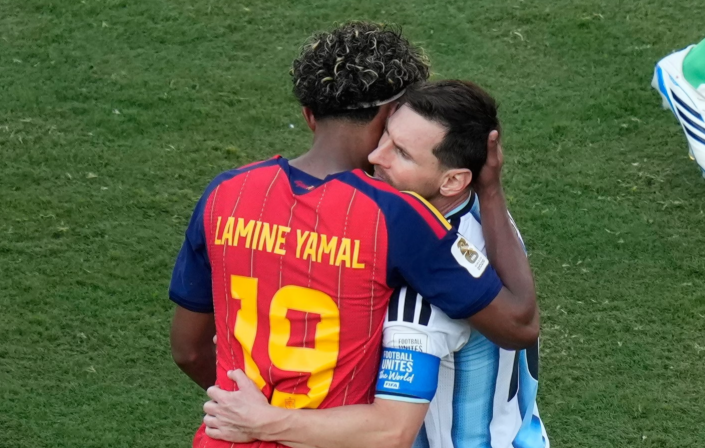
Consistency and Durability: The Hidden Threshold for a Prodigy’s Growth
Seven goals in four matches represents a short hot streak. Messi’s greatness stemmed from over a decade of sustained elite output. During his peak campaigns, he consistently hit 40+ goals per season, delivering high-level performances across La Liga, the Champions League and domestic cups against varied defensive styles, alongside remarkable injury resilience.
Yamal is still navigating physical maturation. High-intensity matches carry risks of fatigue and muscular injuries. He made his first-team debut at 15, and the heavy fixture schedule puts immense strain on his developing body.
Young talents commonly see efficiency drop after a bright start; once opponents analyse his tendency to cut inside and shoot, scoring opportunities will become much harder to come by.
Mental maturity matters equally. Messi repeatedly dragged his side back from losing positions in high-stakes matches with match-winning individual quality.
Yamal already has major tournament success after winning the European Championship, yet he lacks enough defining knockout Champions League and El Clásico performances where he single-handedly carries the team.
To complete a Messi-style evolution, he must develop not just technical skill, but composure under pressure and sharp defensive reading over time.
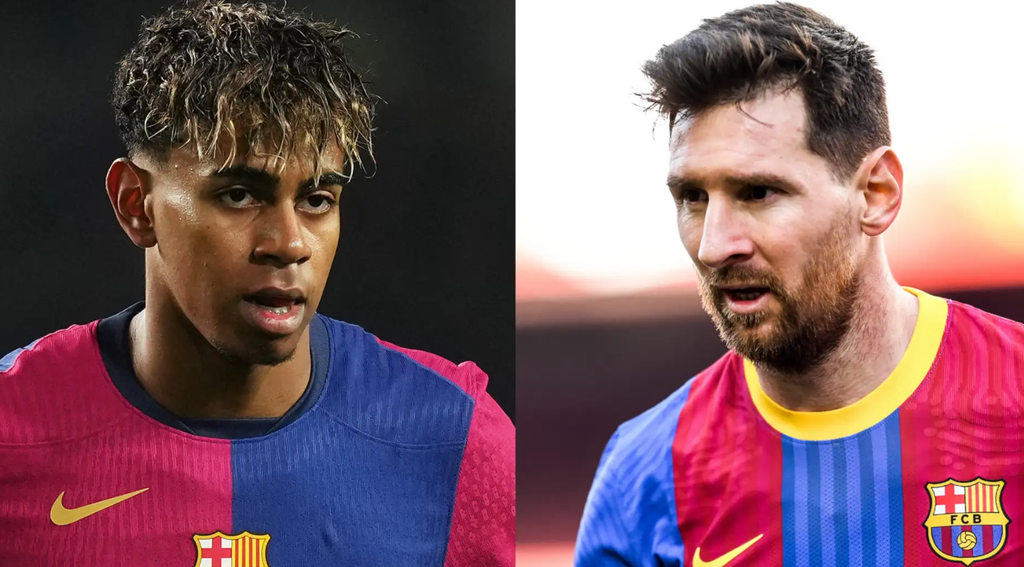
No Need to Replicate Messi: Yamal Can Forge His Own Path
Realistically, Yamal will never fully replicate Messi’s career trajectory. Messi was a once-in-a-generation talent blessed with an unparalleled mix of physique, touch and creativity, a blueprint impossible to recreate. This does not mean Yamal cannot become an all-time great. He does not have to live in Messi’s shadow.
Flick’s tactical remodelling is steadily unlocking his full potential. If Yamal continues to polish his passing vision, improve his playmaking in stationary attacks, and learn to toggle between carrying, off-ball movement and finishing freely, he can grow into a versatile forward in his own right. He does not have to be the next Messi — he can become Barcelona’s new cornerstone.
His seven-goal hot streak proves Yamal has the raw talent to develop into an elite striker. Still, a Messi-style positional evolution is a long marathon rather than a few standout matchdays.
The true test will arrive later this season: when opponents have scouted his cut-in habit, when fixtures pile up and injuries loom, can Yamal keep evolving and fix his playmaking weaknesses?