

In the UEFA Nations League clash between Portugal and Wales, Portugal secured a narrow 1-0 victory courtesy of Felix’s long-range strike. However, behind this win, Cristiano Ronaldo’s on-pitch performance sparked heated debate. He registered seven shots with only two on target, wasting multiple promising chances including a golden half-open goal opportunity.
One of his single-goal finishes was ruled out for offside by VAR. He earned a post-match rating of just 5.8, the lowest on the pitch. Many fans raised the question: as he enters the twilight of his career, should Ronaldo step down from Portugal’s national team to make room for younger talents?
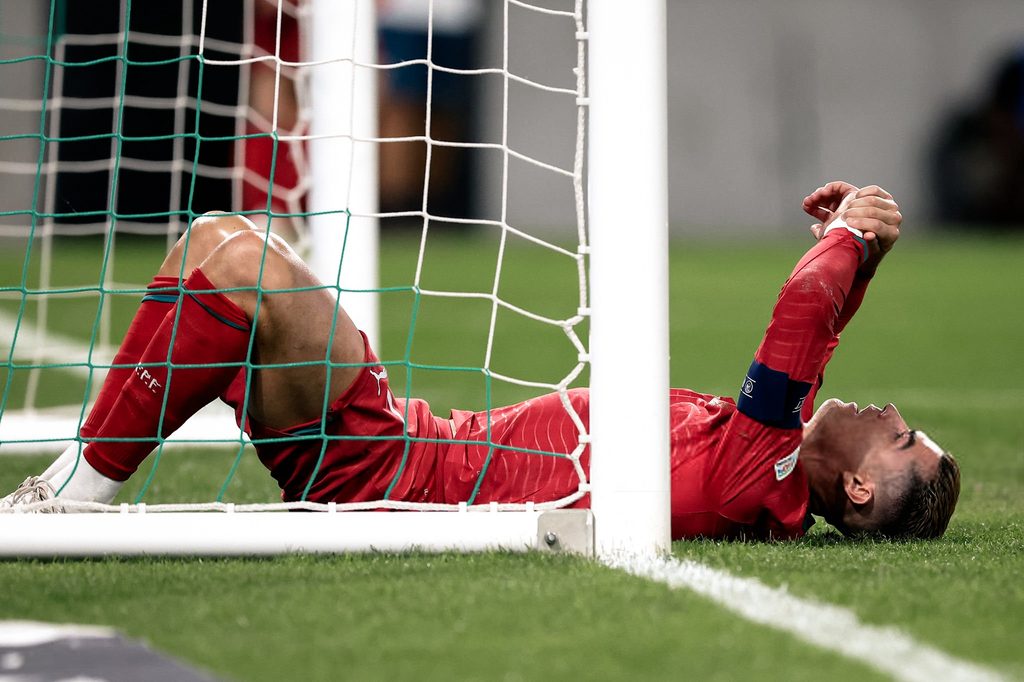
1. Match Recap: Plenty of Chances, Flawed Finishing and Movement
Ronaldo started as the central striker, and his teammates kept supplying him with quality passes throughout the game. In the 9th minute of the first half, Felix played a through ball, and Ronaldo broke into the box for a low angled shot that rolled wide. In the 16th minute, B 费’s cross was met by Ronaldo, whose close-range attempt was blocked by a defender. At 37 minutes, Cancelo’s chip found Ronaldo, but his spinning volley flew off target.
The defining moment arrived in the 49th minute of the second half. Neto delivered a cross from the right flank, and an unmarked Ronaldo skied a simple volley from half a yard out. Ten minutes later, B Fernandes produced a pinpoint through pass.
Ronaldo sprinted through on goal and slotted home, only for the semi-automated offside system to show he was half a body ahead when receiving the ball. The goal was cancelled. Slow-motion replays revealed poor timing on his runs.
Such repeated offside calls are not accidents; they stem from the decline in explosive physical ability that comes with age. Ronaldo was substituted by Gonçalo Ramos in the 67th minute, handing the captain’s armband to B Fernandes after a frustrating 67 minutes on the pitch.
Statistically, his expected goals (xG) hit 1.32, meaning he received high-quality opportunities, yet his finishing efficiency was poor.
The striker once famous for elite box movement and predatory instincts now struggles to convert simple half-open chances and time his bursts to beat the offside trap. The drop in instant body control and acceleration is laid bare in high-intensity international fixtures.
2. A Balanced View: Not Finished, But a Role Change Is Required
Judging purely from this single match, Ronaldo’s performance fell short of the standard required for a starting centre-forward. Still, calling for his immediate retirement based on one disappointing game would be too simplistic. Ronaldo stands as Portugal’s all-time top scorer. He has featured across multiple Euros and World Cups, and was a key figure in the historic Euro 2016 triumph.
His mental toughness and big-match experience remain assets young Portuguese players are yet to match.
Nevertheless, reality cannot be ignored. With advancing age, his top-end sprint speed, repeated bursts and sharp reflexes in front of goal have declined noticeably.
In his prime, he could repeatedly attack defensive lines and time anti-offside runs to score. Today, fast surges often leave him caught offside. Even straightforward close-range shots can fail due to reduced bodily coordination. Ronaldo is no longer suited to start and lead the line for full 90 minutes. Sustained high-intensity play drains him and can disrupt Portugal’s attacking rhythm.
Portugal boasts rich attacking talent. Young forwards such as Gonçalo Ramos and Felix offer greater pace and fit modern football’s demands for high pressing and quick transitions. Under new manager Jesus, Portugal needs to field young attacking talents consistently to build a first-choice attack for upcoming major tournaments.
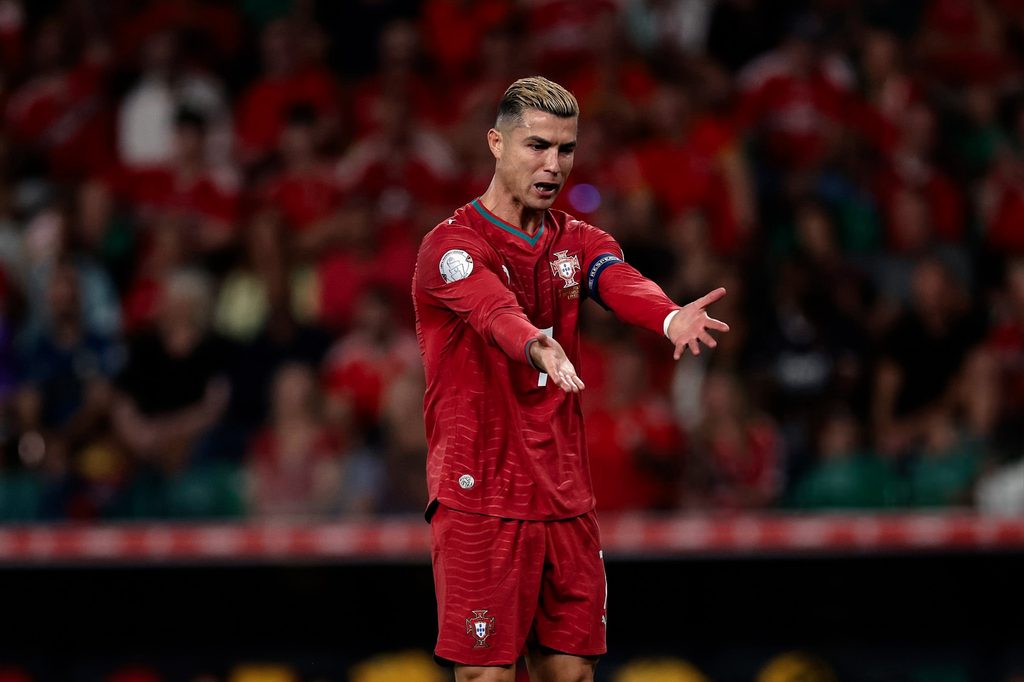
3. What Comes Next? Bench Role or Full National Team Exit?
The debate over Ronaldo’s future with Portugal boils down to two realistic options, rather than the binary choice between starter or full retirement.
Option one: accept a substitute role. Ronaldo could come off the bench in the latter stages of matches. Drawing on his experience and set-piece expertise, he may impact games when opponents grow fatigued. Reducing starts eases his physical load. This preserves his value for the squad without blocking young strikers from vital starting minutes.
Option two: retire from international football and focus solely on club football. If Ronaldo cannot embrace a backup role and insists on being the starting centre-forward, stepping away from the national team may be the sensible route. International football demands relentless running and repeated sprints.
When his physical capacity no longer meets starting requirements, holding a starting spot can limit tactical flexibility and slow the development of emerging talents.
Football follows natural cycles. No player can stay at the peak forever.
This fixture against Wales encapsulates the gradual decline in Ronaldo’s physical powers. The missed half-open goal and disallowed offside strike expose his weakened finishing and movement. That does not erase all his value to Portugal’s national team. The future of Portuguese football belongs to its new generation.
The core of Ronaldo’s decision is not determined by this one match. It hinges on whether he can accept a reduced role. If he can step back from starting duties and serve as an impact substitute, he can remain a spiritual leader in the squad. If he insists on retaining the starting centre-forward role, a dignified exit from international football may be the best outcome. Legends eventually fade, yet the legacy Ronaldo built will never be defined by a single tough game.